
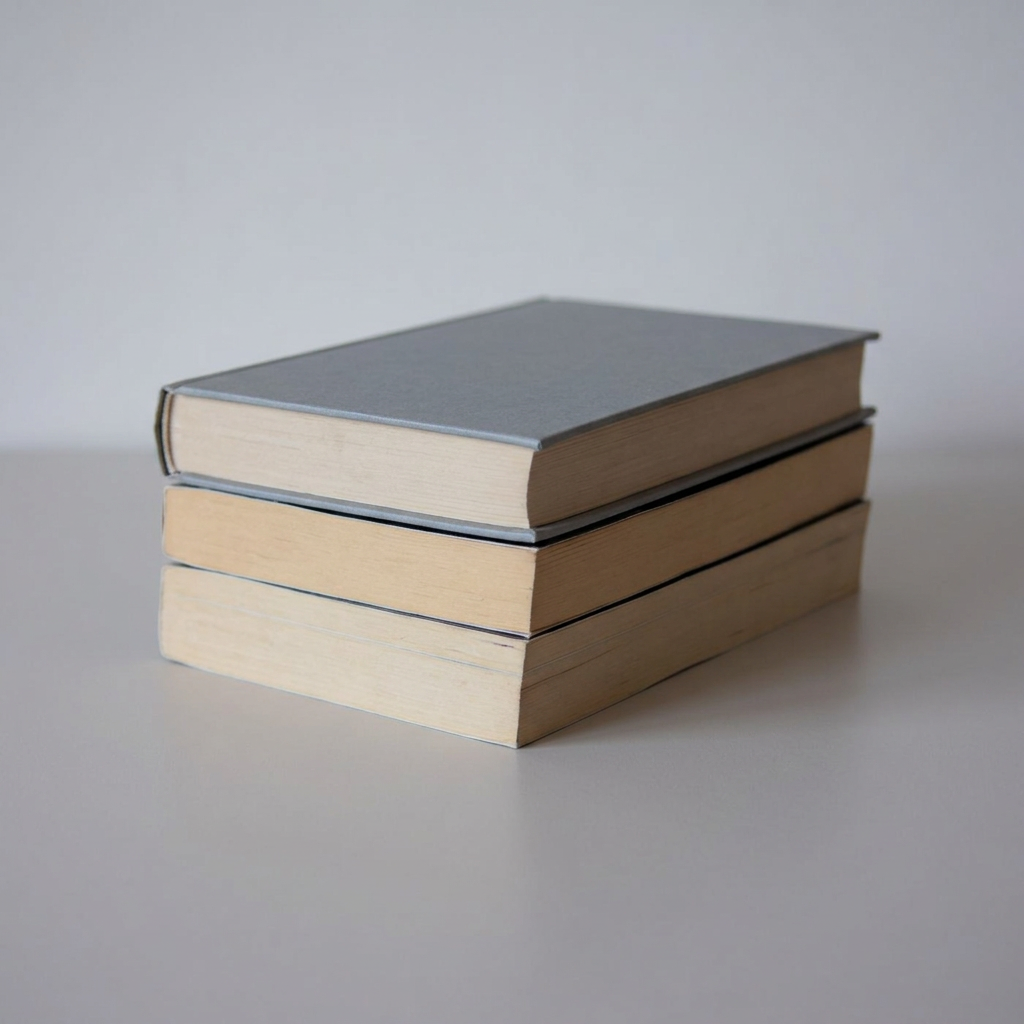
Softcover: versatile and affordable
A softcover has a flexible cover of sturdy board, usually 240 to 300 gsm, with matt or gloss lamination. The inside pages are perfect bound: the spine is glued flat. Softcover is light, cheaper to ship and the logical choice for novels, study books, reports and dissertations.
Hardcover: durable and premium
With a hardcover the inside pages are bound into a sturdy board case, with endpapers and optionally a dust jacket or ribbon marker. That gives a gift-like appearance and a longer lifespan, ideal for anniversary books, photo books, reference works and books that see intensive use.
What to consider when choosing
- Use: carried around daily (softcover) or kept and presented (hardcover)
- Page count: hardcover makes less sense for very thin books
- Shipping costs: hardcover is heavier and therefore more expensive to send
- Budget: softcover is cheaper per copy
- Lying flat: does the book need to stay open? Then consider wire-o